

The Cuban dictatorship, primarily through its intelligence services such as the General Directorate of Intelligence (DGI, now known as the Cuban Intelligence Services or CuIS), has engaged in targeted efforts to influence and infiltrate U.S. higher education institutions for over six decades.
These activities have focused on espionage, recruitment of agents of influence, and the acquisition of sensitive information or expertise. This has been a long-standing strategy, dating back to the Cold War era, with operations continuing to the present day.


Key Methods of Influence and Recruitment
Cuban intelligence prioritizes universities for their access to emerging leaders, researchers, and unclassified but valuable data (e.g., in science, policy, or technology).
Common tactics include:
Ideological grooming and mentorship: Approaching idealistic or vulnerable students (often via cultural events, study abroad, or leftist student groups) with promises of revolutionary ideals, economic incentives post-embargo, or blackmail. Professors or academic mentors are recruited to “spot and assess” promising individuals.
Clandestine operations: Using encrypted communications, dead drops, or intermediaries (e.g., via the Cuban Mission to the UN or cultural centers) to avoid detection. Recruits may be tasked with sharing research, influencing peers, or accessing classified info later in their careers.
Exploiting exchanges: Leveraging academic programs or delegations to embed officers or identify targets during visits.
These efforts are low-cost and ideology-driven rather than financially motivated, appealing to anti-imperialist sentiments.
Some Notable Examples
Historical Cases (Pre-2020):
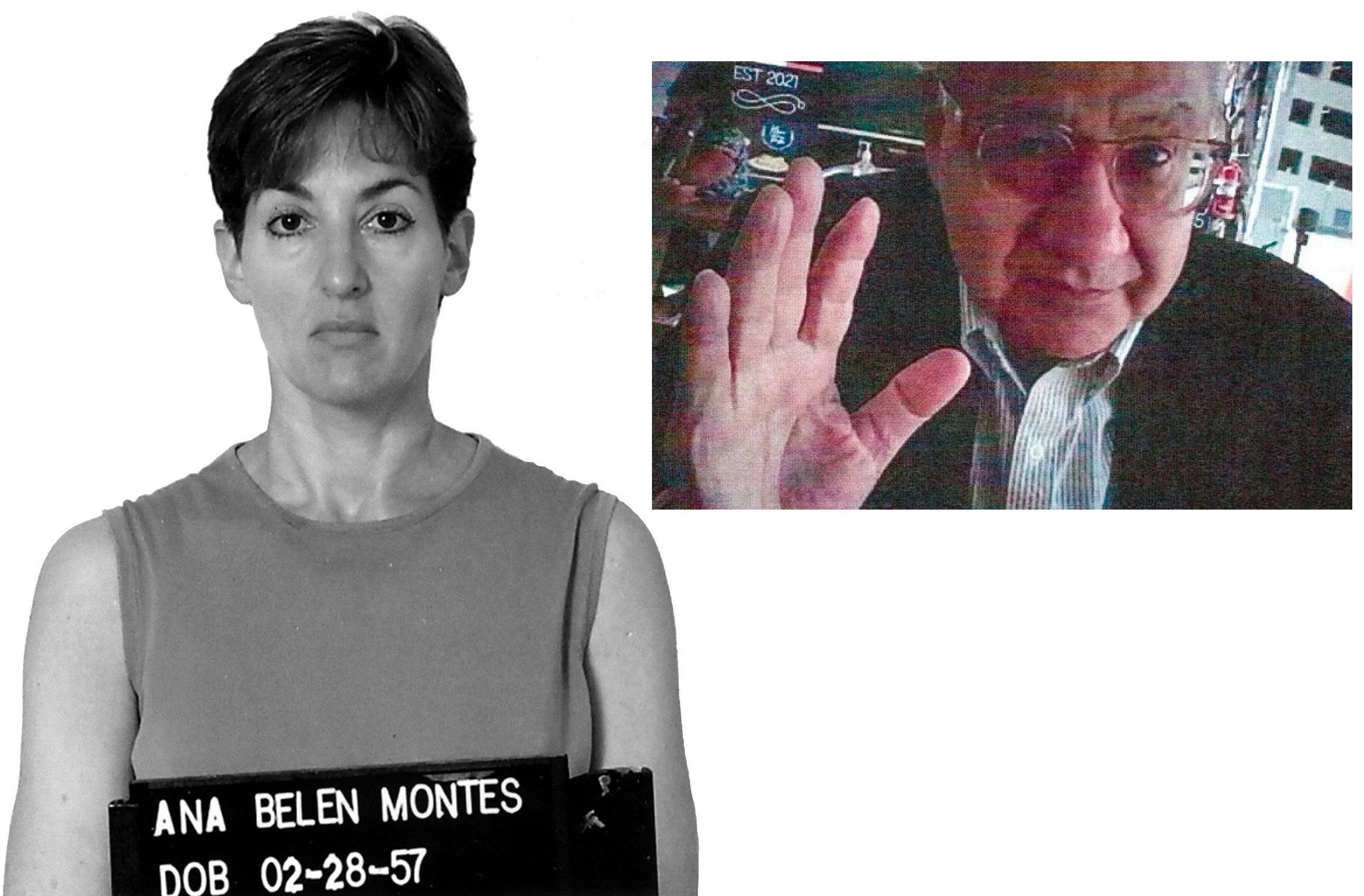
Ana Belen Montes: Recruited by Cuban intelligence while a Johns Hopkins University student in the 1980s. She rose to become a top U.S. Defense Intelligence Agency analyst, passing classified secrets on Latin America for over 16 years before her 2001 arrest. A 2002 analysis by former Cuban intelligence officer José Cohen detailed how the DGI prioritized universities for their access to sensitive research, policy influencers, and future leaders. For instance, in 1984, a Cuban student-spy at Johns Hopkins University identified Ana Montes—a graduate student in international studies—as a recruit due to her grievances with US-Cuba policy. Montes went on to become a high-level Defense Intelligence Agency analyst, passing classified information to Cuba for nearly 17 years before her 2001 arrest. This case exemplifies how Cuba used academic environments to spot and cultivate long-term assets.
Montes got people killed. She revealed to Cuban intelligence the true names of at least 4 covert U.S. agents operating in Havana. The DGI told Ana Belen Montes, “We were waiting for him here with open arms,” about one of the agents she exposed. Weeks after her DIA-sponsored trip to a Salvadoran military camp in early 1987 (where US soldiers were training Contra rebels), the outpost was attacked, killing one American Green Beret and the 43 Nicaraguans who’d been fighting beside him. After her arrest, Montes showed no remorse for the lives she likely ended, saying “Espionage always hurts someone.”
Carlos and Elsa Alvarez: Carlos, a psychology professor at Florida International University, admitted in 2007 he spent nearly 30 years sharing information with the Cuban government about Miami’s exile community. He pleaded guilty to conspiring to act as an unregistered Cuban agent and was sentenced to five years in prison. His wife Elsa pleaded guilty to concealing her husband’s actions and was sentenced to three years.
The Venceremos Brigade as a Radicalization Pipeline: Launched in 1969 by US Students for a Democratic Society (SDS) with Cuban government support, the Venceremos (”We Shall Overcome”) Brigade sent thousands of American students to Cuba for “solidarity work” brigades, ostensibly to harvest sugarcane and defy the US embargo. In reality, participants underwent intensive political indoctrination, including sessions on revolutionary theory and anti-imperialism, often led by Cuban officials. Over 10,000 US youth participated by the 1980s, with many returning as vocal advocates for Cuban-style socialism, organizing campus protests and influencing leftist movements. Critics, including US intelligence reports, described it as a deliberate subversion tool to radicalize youth and embed pro-communist networks in US institutions.
Broader Ideological Subversion: During the 1970s-1990s, Cuba’s DGI established “academic fronts” through conferences, exchange programs, and funded research to normalize its narrative in US syllabi. This included downplaying Cuba’s human rights abuses while amplifying critiques of US foreign policy. Declassified FBI files from the era document Cuban agents posing as scholars to infiltrate departments of Latin American studies, where they influenced curricula and recruited sympathetic faculty.
Ongoing and Recent Operations (2020–2025):
A multi-decade network (1970s–2000s) run by U.S. professors and researchers at two unnamed prominent universities assessed up to 50 students and colleagues, successfully recruiting at least six. It shared biological research and reagents with Cuba, which then passed data to allies like North Korea and Russia. Operations involved grooming recruits through dissertation supervision and secret CuIS meetings.
Victor Manuel Rocha: Radicalized during his time at Yale University in the late 1960s and early 1970s amid campus protests and leftist activism. He later became a U.S. ambassador, spying for Havana for over 40 years until his 2023 arrest. Rocha served on the National Security Council and as U.S. Ambassador to Bolivia—all the while secretly operating as a Cuban agent. He was sentenced to 15 years in prison on April 12, 2024. His case, exposed in 2023 but culminating in 2024, exemplifies how Cuban operations exploit university environments to groom future officials for long-term infiltration of U.S. policy and national security circles.
Influence on Campus Protests (May 2024): A Wall Street Journal analysis linked Cuban intelligence to fueling anti-Israel protests on U.S. campuses, noting that “outside agitators” shared the regime’s anti-imperialist ideology and received practical support from Havana. This reflects Cuba’s strategy of leveraging academic activism to promote pro-regime narratives and destabilize U.S. discourse, building on historical burrowing into educational institutions.
Cultural and Digital Influence: Cuba funds pro-regime events at US universities, such as film festivals and lectures that romanticize the revolution, contributing to surveys showing 20-30% of college students viewing Cuba favorably over the US (e.g., a 2025 poll where many praised its “socialist” education system). Social media amplifies this, with Cuban state accounts targeting Gen Z activists.
Countermeasures
The FBI issued a 2024 advisory warning of continued Cuban targeting of U.S. campuses, emphasizing vulnerabilities in academic freedom.
U.S. intelligence assessments in 2024 noted Cuba’s “particular talent” for ideological recruitment, with spies embedded in delegations to approach visiting students.
Broader Context and U.S. Response
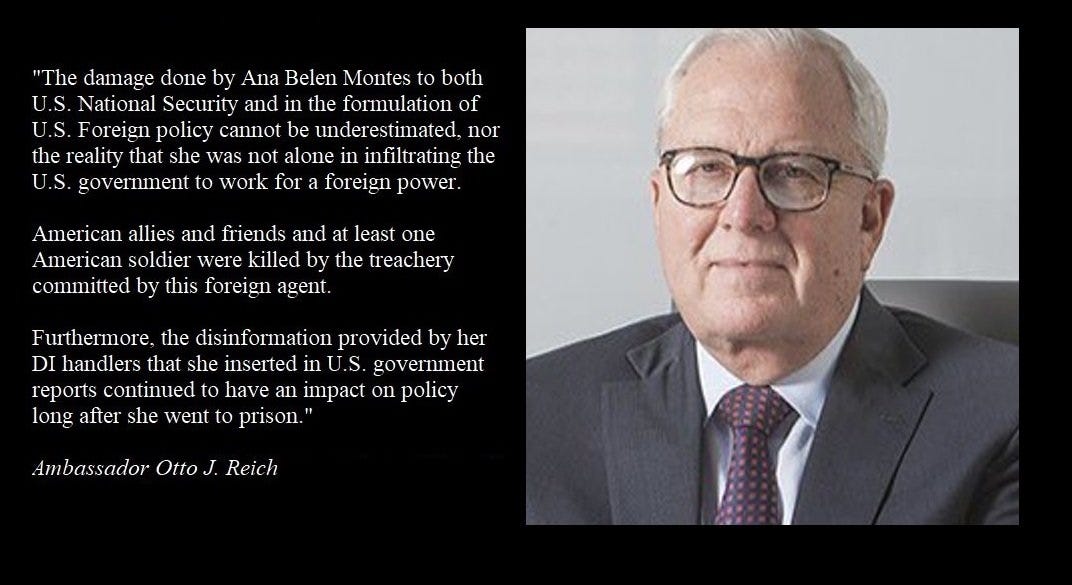
Havana’s strategy aligns with its foreign policy goals: countering U.S. influence in the Americas, infiltrating the U.S. government to gather intel and sell it to hostile powers, promoting pro-communist narratives, and shaping U.S. policy.
U.S. counterintelligence has disrupted networks. Although, American universities are encouraged to implement training on foreign intelligence threats, vet foreign interactions, and report suspicious activities (e.g., undisclosed meetings with Cuban officials or requests for sensitive research) it appears that the threat is underestimated.
“Positive” academic ties, like student exchanges resumed in 2014, continue despite espionage risks, as they supposedly foster people-to-people diplomacy, but place U.S. students, and academics at the mercy of the Cuban intelligence services.
In summary, the Cuban government’s role is primarily covert and opportunistic, leveraging academia for intelligence gains and recruiting agents in a long game to subvert government institutions, and profit from selling U.S. secrets to hostile foreign actors. For deeper reading, refer to declassified FBI reports or books like The Main Enemy on Cold War-era operations.


Todavía quedan cientos, para no decir miles y que algunos se muestren incrédulos, enviados y reclutados por el régimen Castro, con el objetivo de desestabilizar a los Estados Unidos y "brindar" vender información de espionaje a otros Gobiernos enemigos de los Estados Unidos.
También para influir en elecciones, políticas de seguridad y comercio de países Democráticos en el hemisferio.